We earn a commission if you buy through our links, at no extra cost to you.
Sewing Machine for Beginners: What to Look For
Buying a first sewing machine as an adult? Compare mechanical and computerized models, easy threading, bobbins and buttonholes, then see four good fits.
At a glance
A first machine needs an automatic needle threader, a top drop-in bobbin and a one-step buttonhole. The Brother XM2701 is the simple dial starter, and the Brother CS7000X adds a screen, 70 stitches and a walking foot. The Janome HD3000 Black Edition and the Singer Heavy Duty 4552 suit jeans and thicker fabrics.
Shopping for a first sewing machine as an adult is mostly about avoiding the wrong kind of complexity. You do not need hundreds of stitches or embroidery. You need a machine that threads easily, makes a decent buttonhole, handles the fabrics you actually plan to sew and does not stall on the first thick seam. This guide walks through the choices that matter, then shows the four machines in our ranking that suit a beginner. To compare all nine models, see our ranking of the best sewing machines of 2026.
We write from published sources, not our own measurements. Specs come from the manufacturers’ product pages, which are listed at the end.
Mechanical or Computerized?
A mechanical machine uses dials: one for the stitch, one for length, one for width. What you see is what you set. There is no screen, and the number of stitches is usually modest. A computerized machine uses buttons and an LCD, often with many more stitches and extras such as a needle up/down key or a thread cutter.
For a beginner, either works. Dials are quick to understand and have nothing to navigate. A screen helps if you like seeing the selected stitch and settings, and it gives you room to grow. What matters more than the control style is the short list below.
Features That Make Threading and Sewing Easier
- Automatic needle threader. Threading the needle is the step beginners dislike most. Brother lists one on the XM2701 and the CS7000X, Janome lists a built-in threader on the HD-3000, and Singer lists an integrated one on the Heavy Duty 4552.
- Top drop-in bobbin. You lift a cover and drop the bobbin in. A clear cover lets you see how much thread is left. Singer calls its top drop-in bobbin jam-resistant on the 4552, and Brother says the same of the XM2701’s Quick-Set bobbin.
- One-step buttonhole. You lower the buttonhole foot lever and the machine sews a buttonhole sized to the button. Brother lists one-step buttonholes on both of its models here, Janome lists one on the HD-3000 and Singer lists one on the 4552.
- A free arm. Remove a small section of the bed to sew cuffs, sleeves and trouser hems.
- Speed control. A limiter keeps the machine at a pace you can follow. Singer lists it on the 4552, and Brother lists adjustable sewing speed control on the CS7000X.
- A walking foot. It feeds layers together and helps with thick seams and quilts. Brother includes one with the CS7000X and Singer includes one with the 4552.
Two other points are worth checking. First, thread tension: Brother and Janome list manual tension on the machines here, so plan on learning to adjust it. Second, what is missing. Several models have no automatic thread cutter, so keep small scissors beside the machine.
Needles, Fabric and What to Practice First
A machine sews only as well as its needle. Schmetz sells a Universal needle in sizes 60/8 to 120/19, a Denim/Jeans needle in 70/10 to 110/18, a Jersey/Ball Point needle for knits and some stretch fabrics and a Leather needle for leather and artificial leather. In practice, lower numbers are finer needles for lightweight cloth, higher numbers are thicker needles for heavy cloth, and the type matters as much as the size. Change the needle at the start of each project. A dull or wrong needle is a common cause of skipped stitches and puckering.
Practice in this order, on scrap fabric:
- Straight lines on two layers of cotton. Guide the fabric; do not push it.
- Corners and curves. Stop with the needle down, lift the foot, pivot, lower it.
- Backstitching at the start and end of every seam.
- Zigzag along a raw edge to stop it from fraying.
- A buttonhole on a folded scrap with a button of the right size.
- A zipper with the zipper foot.
Only then move on to a hem or a simple garment. Settling the thread tension on scraps first saves a lot of frustration.
Picking a Machine to Alter Clothes
Most beginners want to hem, mend and take in clothes. That calls for a zipper foot, a blind hem stitch, a one-step buttonhole and a free arm. Hemming jeans is harder: the seams are thick, and a basic machine can stall where they cross. A walking foot, a denim needle and adjustable presser foot pressure all help. Domestic machines handle a few layers of denim and light garment leather; thick tooling leather needs an industrial machine.
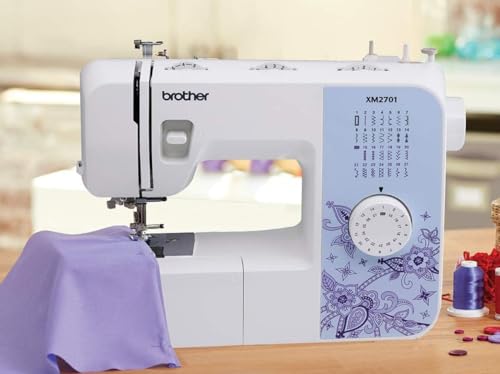
Brother XM2701: The Simple Dial Starter
A light dial machine with 27 stitches, an automatic needle threader, a one-step buttonhole and a 25-year limited warranty. Good for learning, hems and mending.
Brother describes the XM2701 as perfect for beginners learning to sew. It lists 27 built-in stitches, a jam-resistant Quick-Set top drop-in bobbin, an LED work area and six feet, including zipper and blind stitch feet. The spec table lists no thread cutter, no needle up/down and no adjustable presser foot pressure, and the machine is not meant for thick denim or leather. It is the pick for a first machine used for hems, repairs and light projects. Read the Brother XM2701 profile.
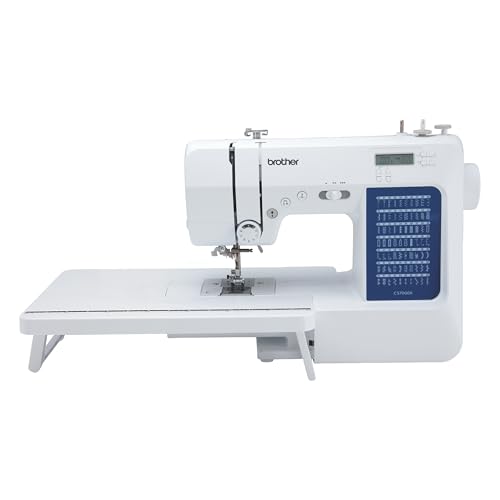
Brother CS7000X: A Screen and Room to Grow
A computerized machine with 70 stitches, an LCD, a wide table and ten feet including a walking foot. For beginners who want features to grow into.
Brother lists 70 built-in stitches, seven one-step buttonhole styles, an automatic needle threader, threading diagrams and a 25-year limited warranty with free phone and online support. Its listed top speed is 750, and it has no thread cutter or needle up/down. It suits a beginner who wants a screen, many stitches and a walking foot in the box. Read the Brother CS7000X profile.
Janome HD3000 Black Edition: Sturdy and Simple
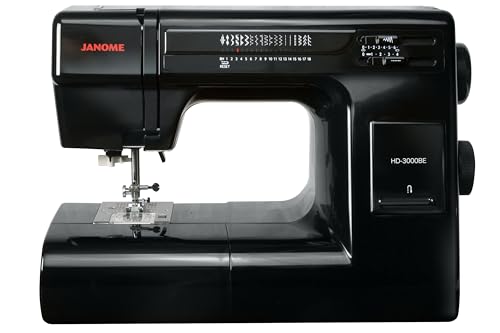
A mechanical heavy-duty machine with an aluminum frame, 18 stitches, a built-in needle threader and a hard cover. For beginners who sew heavier fabrics.
Janome calls the HD-3000 perfect for a beginner or a sewist doing a wide range of sewing, and mentions an instructional guide in the top tray door that lists feet and stitch settings for common tasks. Its specifications list 18 stitches, a buttonhole (called one-step in the description), manual thread tension and a weight of 18.7 pounds. The Amazon listing is the black-finish Black Edition sold with a quilting kit. See the Janome HD3000 profile.
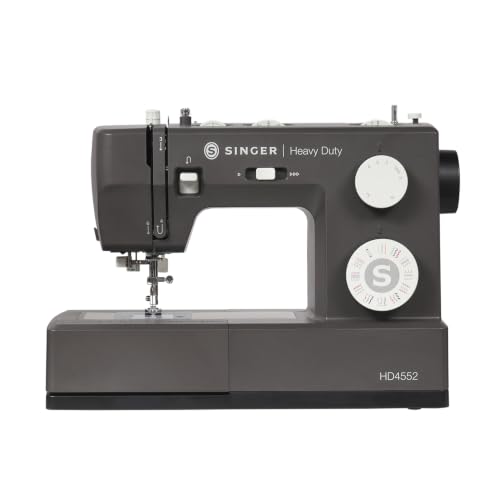
Singer Heavy Duty 4552: For Jeans and Thicker Fabrics
A metal-frame dial machine with 32 stitches, speed control, a walking foot and a non-stick foot included. For hems on jeans, bags and home decor.
Singer lists a full metal interior frame, 32 stitches, an integrated needle threader, a top drop-in bobbin, a one-step buttonhole and up to 1,000 stitches per minute. It also includes a walking foot and a non-stick foot. Singer frames it as a machine for experienced sewists, so it works best for a beginner who already knows they will sew denim, canvas or vinyl. Read the Singer Heavy Duty 4552 profile.
A Quick Way to Choose
- Mending and hems, smallest footprint: Brother XM2701.
- More stitches and a screen: Brother CS7000X.
- Heavier fabrics with simple dials: Janome HD3000 Black Edition or Singer Heavy Duty 4552.
- Quilting or fast straight seams later: a straight-stitch machine, which has no zigzag and no buttonholes, makes a better second machine than a first.
Whichever you choose, buy extra needles, a seam ripper and small scissors, and register the machine for its warranty. Keep the manual: both Brother models include manuals in English and Spanish, and Singer points owners to its Creativate app for manuals and threading guides.
Sources
- Brother XM2701 official product page (Internet Archive copy, October 8, 2026)
- Brother CS7000X official product page (Internet Archive copy, October 28, 2026)
- Janome HD-3000 official product page (Internet Archive copy, September 24, 2026)
- Singer Heavy Duty 4552 official product page
- Schmetz needle guide
Frequently asked questions
Should a beginner buy a mechanical or a computerized sewing machine?
Either works. A mechanical machine, such as the Brother XM2701 with its stitch dial, has no screen to learn and is easy to understand. A computerized machine, such as the Brother CS7000X, shows the stitch and settings on an LCD and offers many more stitches, but has more menus to learn.
What features make a sewing machine easy to thread?
Look for an automatic needle threader, a top drop-in bobbin with a clear cover so you can see the thread, and printed threading diagrams on the machine. Brother, Janome and Singer all list a needle threader and a top-loading bobbin on the models in this guide.
Which needle should I use for jeans or stretch fabric?
Schmetz makes a Denim/Jeans needle for denim and a Jersey/Ball Point needle for knits and some stretch fabrics. Use a new needle that matches the fabric, since a dull or wrong needle causes skipped stitches.
Can a beginner machine alter clothes?
Yes, for hems, taking in seams and replacing zippers. A zipper foot, a blind hem stitch and a free arm for cuffs and sleeves cover most alterations. Thick jeans hems are easier with a walking foot and a machine meant for heavier fabric.
What should I practice first?
Sew straight lines on scrap cotton, then corners and curves, then a zigzag edge, a buttonhole and a zipper. Do all of it on scraps before you touch a garment.
Is a straight-stitch-only machine a good first machine?
Usually not. Straight-stitch machines such as the Juki TL-2010Q and the Brother PQ1600S do no zigzag and no buttonholes, so they suit quilters and experienced sewists better than someone who wants to hem, mend and finish garments.