We earn a commission if you buy through our links, at no extra cost to you.
Comparison
Best Sewing Machines 2026: 9 Models Compared
We compared published specs for 9 sewing machines from Juki, Brother, Janome and Singer: computerized, heavy-duty, straight-stitch and embroidery combo.
B By the Best Sewing Machines editorial team ·Published
At a glance
For most sewists, start with the Juki HZL-F600: 225 stitch patterns, box feed and automatic thread trimming. The Brother SE2000 adds a 5 x 7 inch embroidery area to a full sewing machine, and the Juki TL-2010Q is a fast straight-stitch machine for quilters and bag makers who do not need zigzag.
Nine machines are in this ranking, and they are not the same kind of tool. One is a sewing and embroidery combo, two sew only a straight stitch, two are heavy-duty machines built around a metal frame, and the rest are computerized or mechanical all-rounders. This ranking is built from the specifications the makers publish; we run no sewing trials of our own. Every figure below is attributed to Juki, Brother, Janome or Singer, and when a source did not list a number we left it out. If you already know how you will use the machine, our guides to the best sewing machine for beginners, for denim and leather and for quilting will narrow the field faster.
How We Chose
A few questions sort the field.
What you sew. Garments need zigzag, buttonholes and a few stretch stitches. Quilting needs a 1/4 inch foot, a drop feed or free-motion foot and room to the right of the needle. Bags and home decor need strong feeding and a high presser foot lift.
Straight stitch or full-featured. Straight-stitch machines are fast and precise but cannot zigzag or make buttonholes. Full-featured machines trade a little speed for versatility.
Feeding and presser foot. When you sew thick layers, a walking or even feed foot, adjustable presser foot pressure and a good lifter matter more than the number of stitches.
Workspace. Needle-to-arm space decides how much quilt you can roll under the arm. We list it where the maker gives it.
Computerized or mechanical. Computerized machines add a display, more stitches and conveniences such as thread trimming. Mechanical machines are simpler and often lighter.
Warranty and support. The terms on the pages we opened range from one year on parts to a 25-year limited warranty.
The ranking puts the models with the widest capability and the strongest build at the top. A simpler machine is often the right answer for a beginner, so each section says who the machine suits. Each model also carries a price-range badge on our site, relative to these nine machines.
Comparison Table
#
Model
Type
Stitches
Max speed (stitches/min)
Workspace
1
Juki HZL-F600
Computerized, box feed
225 patterns
900
About 8 in (203 mm) arm size
2
Brother SE2000
Computerized sewing and embroidery combo
241 sewing stitches, 193 embroidery designs
850 sewing, 650 embroidery
7.4 in needle to arm
3
Juki TL-2010Q
Straight-stitch, semi-industrial
Straight stitch only
1,500
8.5 x 6 in arm
4
Brother PQ1600S
Straight-stitch quilting
Straight stitch only
1,500
5.7 x 8.7 in needle to arm
5
Janome HD3000 Black Edition
Mechanical, heavy-duty
18
—
6.5 x 4.6 in workspace
6
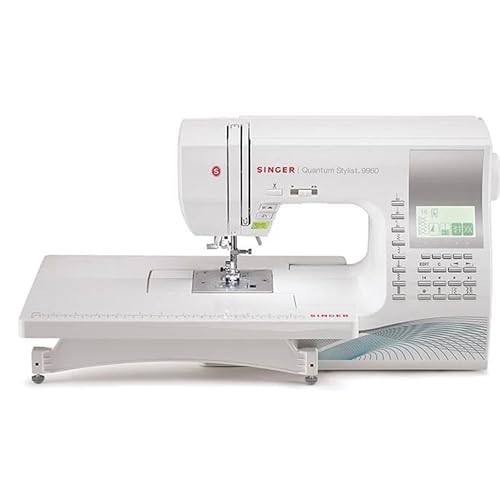
Singer Quantum Stylist 9960
Computerized
600 (1,172 stitch applications)
850
—
7
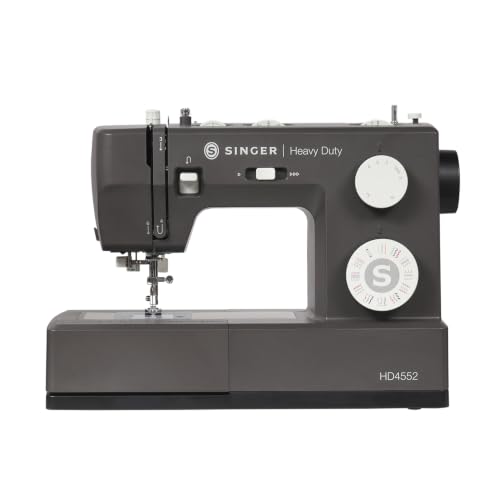
Singer Heavy Duty 4552
Heavy-duty, metal frame
32
1,000
6 in or more right of needle
8
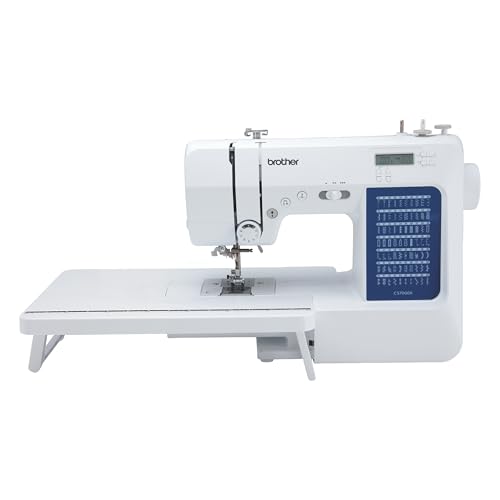
Brother CS7000X
Computerized, LCD
70
750
—
9
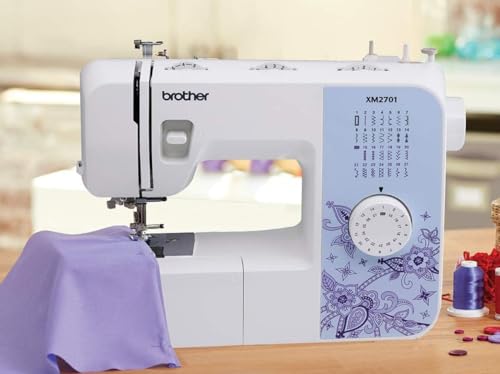
Brother XM2701
Mechanical, dial
27
800
—
Figures come from the maker pages we opened, listed under Sources. A dash means the page did not list that figure. The Janome figures are Janome’s HD-3000 specifications, and the Black Edition is the black-finish HD3000 sold with a quilting kit on Amazon.
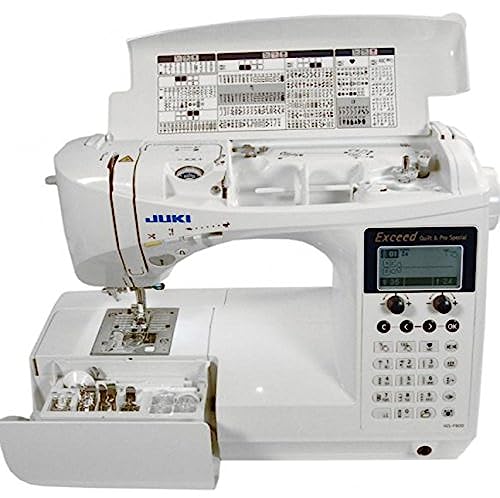
1. Juki HZL-F600 — The All-Rounder for Garments, Quilting and Home Decor
The all-rounder at the top of the range for garments, quilting and home decor, with industrial-style feeding and trimming. It is the one machine here that covers nearly every home sewing job.
What we like
Juki lists 225 stitch patterns, a box feed system and a special steel feed dog for light to heavy fabrics
Automatic thread trimming from a button or the foot controller, plus a knee lifter and 12 mm presser foot lift, per Juki
Walking foot, quilt foot and a wide table are among the standard accessories, per Juki
Drawbacks
Juki lists a top speed of 900 stitches per minute, slower than the straight-stitch machines in this ranking
At 21.6 pounds, per Juki, it is a machine to leave on a table rather than carry to class
The all-rounder at the top of the range for garments, quilting and home decor, with industrial-style feeding and trimming. It is the one machine here that covers nearly every home sewing job.
According to Juki, the HZL-F600 is a computerized machine from its Exceed series with 225 stitch patterns, four alphabetic and numeric fonts and a maximum speed of 900 stitches per minute. Its box feed system moves the feed dog in a box motion, which Juki says avoids material shrinking and shifting, and a special steel feed dog is meant for heavy projects such as hemming denim jeans. The stitch width goes up to about 9/32 inch (7 mm) and the length to about 3/16 inch (5 mm).
The convenience features are what set it apart. Juki lists automatic thread trimming from a button or from the heel of the foot controller, a one-hand automatic needle threader, a knee lifter, presser foot lift of about 0.22 or 0.47 inch (5.5 or 12 mm) with the lever, two LED lights and a wide table. Sixteen buttonhole types are available through a sensor system. The standard feet include a walking foot, quilt foot, open toe foot and patchwork foot. It weighs 21.6 pounds, per Juki.
It ranks first because it handles garments, quilting and home decor on one machine without a compromise on feeding. It is large, sits at the premium end of the range and will not give you embroidery. Our Juki HZL-F600 profile has the full breakdown.
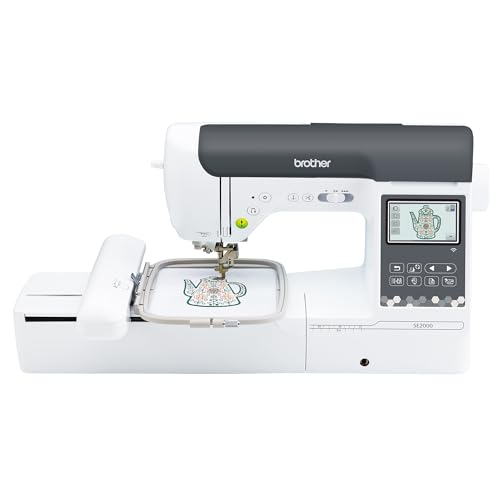
2. Brother SE2000 — The Sewing and Embroidery Combo
The pick if you want one machine for sewing and for embroidery. If embroidery does not interest you, a dedicated sewing machine is the better use of the same budget.
What we like
A sewing and embroidery combo: 241 built-in sewing stitches, 193 built-in embroidery designs and a 5 x 7 inch embroidery area, per Brother
3.7 inch LCD color display, wireless LAN and the Artspira app, per Brother
Automatic needle threader, automatic thread cutter and sewing speeds up to 850 stitches per minute, per Brother
Drawbacks
Embroidery speed tops out at 650 stitches per minute, per Brother
You are paying for embroidery features that a sewist who never embroiders will not use
The pick if you want one machine for sewing and for embroidery. If embroidery does not interest you, a dedicated sewing machine is the better use of the same budget.
Make no mistake: the SE2000 is a combination machine, not a plain sewing machine. Brother lists 241 built-in sewing stitches, 10 styles of one-step auto-size buttonholes, the My Custom Stitch feature and a jump stitch trimming function on the sewing side. On the embroidery side it lists 193 built-in designs, 13 embroidery fonts and a 5 x 7 inch maximum embroidery area.
Brother also lists a 3.7 inch LCD color display, wireless LAN, the Design Database Transfer software and the Artspira app. Needle-to-arm space is 7.4 inches, sewing speed goes up to 850 stitches per minute and embroidery speed to 650. It has an automatic needle threader, an automatic thread cutter and a knee lifter. Brother’s warranty is 1, 2 and 25 years limited.
It sits second because it is the only machine here that embroiders, and its sewing side is well equipped. If you never plan to embroider, the first-ranked Juki is the more focused sewing tool. See the Brother SE2000 profile.
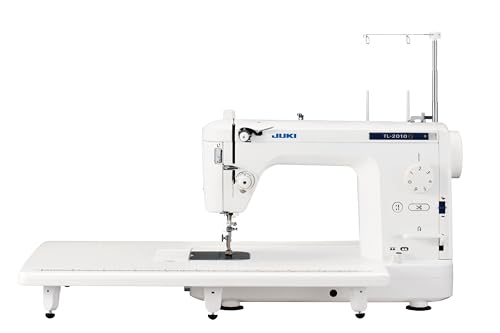
3. Juki TL-2010Q — The Fast Straight-Stitch Machine for Quilters
A fast, precise machine for quilters, bag makers and garment sewists who mostly sew straight seams. Pair it with a second machine if you need zigzag or buttonholes.
What we like
Straight-stitch lockstitch machine with an adjustable top speed from 200 to 1,500 stitches per minute, per Juki
Aluminum die-cast arm and bed, automatic thread trimmer, needle-down stop and a knee lifter, per Juki
Even feed foot, 1/4 inch quilting foot and an auxiliary table come with the machine, per Juki
Drawbacks
Straight stitch only: no zigzag, no buttonholes, no decorative stitches
25.4 pounds, per Juki, so it is not a casual carry-along
A fast, precise machine for quilters, bag makers and garment sewists who mostly sew straight seams. Pair it with a second machine if you need zigzag or buttonholes.
The TL-2010Q is a one-needle lockstitch machine, and it sews only a straight stitch. There is no zigzag, no buttonhole and no decorative stitch. In exchange Juki lists a top speed that you can set anywhere from 200 to 1,500 stitches per minute with a slide knob, an aluminum die-cast arm and bed, an automatic thread trimmer, a needle-down stop, a knee lifter with a presser foot lift up to about 1/2 inch (12 mm), a sub-tension unit and a drop feed.
The workspace is listed as an 8.5 x 6 inch arm, with an auxiliary table for larger projects. Standard feet include a zipper foot, an even feed foot and a 1/4 inch quilting foot. Juki lists the weight at 25.4 pounds.
It ranks third because it is the best machine here for fast, precise seams. It would rank higher for a pure quilter and lower for someone who needs buttonholes. Read the Juki TL-2010Q profile.
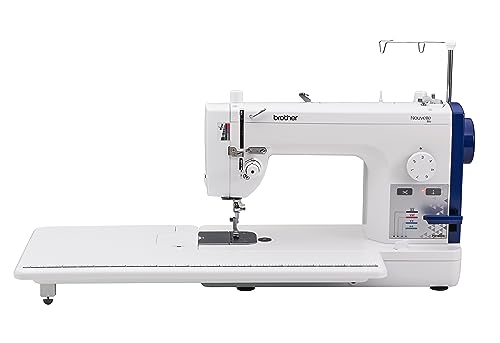
4. Brother PQ1600S — The Straight-Stitch Quilting Machine With a Big Workspace
A quilter-focused straight-stitch machine with a big workspace and a long list of included feet. It suits piecing and free-motion work, not general garment finishing.
What we like
Straight-stitch machine with speeds up to 1,500 stitches per minute and a push-button thread cutter, per Brother
5.7 x 8.7 inch needle-to-arm space and an 11.1 x 23.3 inch extension table, per Brother
Seven included feet, including a free-motion quilting foot and a 1/4 inch foot, plus a knee lifter and built-in cone thread stand, per Brother
Drawbacks
Straight stitch only: no zigzag and no buttonholes
A single-purpose machine: nothing to select, but nothing to fall back on for finishing edges
A quilter-focused straight-stitch machine with a big workspace and a long list of included feet. It suits piecing and free-motion work, not general garment finishing.
Like the Juki above, the PQ1600S sews only a straight stitch. Brother lists speeds up to 1,500 stitches per minute, a push-button thread cutter that cuts the upper and lower thread, and a needle stop position that can be preset up or down. It has four color-coded levels of feed dog adjustment and adjustable presser foot pressure, along with a pin feed mechanism.
The workspace is the highlight: Brother lists a 5.7 x 8.7 inch needle-to-arm space and an 11.1 x 23.3 inch extension table. The seven included feet cover a general purpose foot, a rolled hem foot, a zipper foot, an invisible zipper foot, a 1/4 inch foot, a free-motion quilting foot and a pin feed foot, along with a knee lifter. Brother’s warranty is 1, 2 and 25 years limited.
It ranks fourth, just behind the Juki straight-stitch model, because the Juki lists a wider speed range and a more industrial build. If your projects are mostly quilts, the PQ1600S is a strong choice. See the Brother PQ1600S profile.
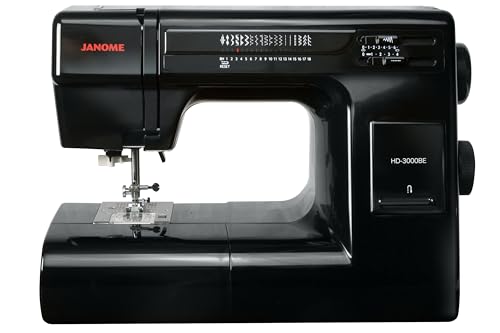
5. Janome HD3000 Black Edition — The Mechanical Heavy-Duty Workhorse
Janome’s HD-3000 specifications describe a heavy-duty machine with an aluminum frame, 18 stitches including a one-step buttonhole, a 5-piece feed dog, a drop feed, a free arm and an extra high presser foot lift. The listed maximum stitch width is about 1/4 inch (6.5 mm), and the machine weighs 18.7 pounds. Janome includes a hard cover, a quilting guide bar and an instructional guide in the top tray door that points to the right feet and settings.
The Black Edition is the black-finish HD3000 sold with a quilting kit on Amazon. Janome also publishes a leather sewing guide for the HD-3000, which is a useful sign of what it is meant to sew. It lacks the stitch count and the conveniences of the computerized machines above it, so it ranks fifth. For the full picture, read the Janome HD3000 profile.
6. Singer Quantum Stylist 9960 — The Feature-Packed Computerized Pick
Singer lists 600 built-in stitches, 1,172 stitch applications including letters, five fonts and stitch sequencing with memory. There are 13 one-step buttonhole styles, a 9/32 inch (7 mm) stitch width with 25 needle positions for straight stitching, an LCD screen, a thread trimmer button, a twin-needle function and an extra high presser foot lifter. Singer lists a top speed of 850 stitches per minute and a 1, 5 and 25 year warranty.
It ranks sixth because it is geared toward decorative and fashion sewing more than toward heavy feeding. If lettering and sequenced stitches are what you want, it is a strong fit. See the Singer Quantum Stylist 9960 profile.
7. Singer Heavy Duty 4552 — The Next Evolution of the Heavy Duty Line
Singer describes the Heavy Duty 4552 as the next evolution of the 4452, with a full metal interior frame and strong piercing power. It lists 32 built-in stitches including utility, stretch and decorative options, a one-step buttonhole, an integrated needle threader and a speed control that lets you cap the maximum speed. Top speed is 1,000 stitches per minute, maximum stitch width is about 0.24 inch (6 mm) and maximum length is about 0.16 inch (4 mm).
Needle positions are left, center and right, and presser foot pressure is adjustable. The even feed (walking) foot and non-stick foot are included for quilts, thick layers, leather and vinyl, and Singer lists more than 6 inches of space to the right of the needle. The warranty is a lifetime warranty on the metal frame, with restrictions. It ranks seventh because the machines above it offer more stitches, more workspace or a sturdier industrial build. See the Singer Heavy Duty 4552 profile.
8. Brother CS7000X — The Well-Equipped Computerized Machine
Brother lists 70 built-in stitches, seven styles of one-step auto-size buttonholes, an LCD display and a higher-end automatic needle threader. It includes 10 feet, among them a walking foot and a quilting foot, along with a quilt guide, a detachable wide table and a hard protective cover. Maximum speed is 750 stitches per minute, the free arm helps with cuffs and sleeves and the drop feed allows free-motion work.
Brother backs it with a 25-year limited warranty and free phone and online technical support for the life of the product. It ranks eighth because it is lighter-duty than the machines above it, but the accessory kit is generous. Read the Brother CS7000X profile.
The XM2701 is the simplest machine in this ranking. Brother lists 27 built-in stitches with 63 stitch functions, one one-step auto-size buttonhole, an automatic needle threading system, a jam-resistant Quick-Set top drop-in bobbin and a bright LED work area. Six feet are included: buttonhole, button sewing, narrow hemmer, zipper, blind stitch and zigzag. Top speed is 800 stitches per minute.
There is no automatic thread cutter, and it is not the machine for many layers of denim or for leather. For a beginner, for mending or for simple projects it is an easy way in, and Brother backs it with a 25-year limited warranty. See the Brother XM2701 profile.
Which One Should You Choose?
The recommendations follow the ranking order.
One machine for most sewing: the Juki HZL-F600 (1). It covers garments, quilting and home decor.
Sewing plus embroidery: the Brother SE2000 (2), the only combo here.
Fast, precise straight seams: the Juki TL-2010Q (3), for the widest speed range and a semi-industrial build.
Quilting with a big workspace: the Brother PQ1600S (4), with the largest needle-to-arm space among the makers’ listings we opened.
Sturdy mechanical machine for denim and canvas: the Janome HD3000 Black Edition (5).
Decorative stitches and lettering: the Singer Quantum Stylist 9960 (6).
Heavy duty with walking foot included: the Singer Heavy Duty 4552 (7).
Computerized variety with a big accessory kit: the Brother CS7000X (8).
Beginners and mending on a small budget: the Brother XM2701 (9).
On budget, the machines at the bottom of the ranking suit tighter budgets, while the top of the ranking is where the larger investments sit. Each model carries a price-range badge on our site, so you can see the tier before you click through. A straight-stitch machine makes a smart second machine rather than a first, unless you sew only quilts and straight seams.
Our Conclusion
The Juki HZL-F600 is our top pick because it combines a computerized interface with industrial-style feeding and trimming. The Brother SE2000 follows for anyone who wants embroidery, and the Juki TL-2010Q and Brother PQ1600S are the best fit for quilters who value speed over variety. The Janome HD3000 Black Edition, Singer Quantum Stylist 9960 and Singer Heavy Duty 4552 cover the middle of the range, and the Brother CS7000X and XM2701 are the approachable choices for new sewists. A machine that fits your projects matters more than the longest stitch list.
We rank the Juki HZL-F600 first. Juki lists 225 stitch patterns, a box feed system, automatic thread trimming and a knee lifter, and includes a walking foot and quilt foot. If you also want embroidery, the Brother SE2000 is second.
Do the Juki TL-2010Q and Brother PQ1600S sew zigzag or buttonholes?
No. Both are straight-stitch machines. Juki describes the TL-2010Q as a one-needle lockstitch machine, and Brother describes the PQ1600S as a straight-stitch machine. They are fast and precise for seams and quilting, but you will need a second machine for zigzag, buttonholes or decorative stitches.
Is the Brother SE2000 a regular sewing machine?
It is a combination machine. Brother lists 241 built-in sewing stitches and 10 buttonhole styles alongside 193 built-in embroidery designs and a 5 x 7 inch embroidery area. You get both functions in one body, which suits you only if you plan to embroider.
Can a home sewing machine sew leather and denim?
Domestic machines can handle a few layers of denim and light garment leather, with the right needle and a walking or even feed foot. Thick tooling leather needs an industrial machine. Janome publishes a leather sewing guide for the HD-3000, and Singer includes a walking foot and non-stick foot with the Heavy Duty 4552.
What is the difference between a computerized and a mechanical machine?
On a mechanical machine such as the Janome HD3000 or Brother XM2701, you pick stitches with a dial. Computerized machines such as the Juki HZL-F600, Brother CS7000X and Singer Quantum Stylist 9960 use a display and electronic controls, usually with more stitches and automatic features.
Which machine is best for quilting?
The Juki TL-2010Q and Brother PQ1600S are built around piecing and free-motion quilting with a 1/4 inch foot, and the PQ1600S lists a 5.7 x 8.7 inch needle-to-arm space. The Juki HZL-F600 adds zigzag and buttonholes if you want one machine for quilting and clothing.