We earn a commission if you buy through our links, at no extra cost to you.
Sewing Machine for Denim, Canvas and Leather
Hemming jeans, sewing canvas or light leather at home? Needles, feet, speed and honest limits, plus five machines that suit the job, from heavy-duty dials to Juki.
At a glance
For jeans, canvas and light garment leather, pair a denim or leather needle with a walking foot and a slow, steady speed. The Janome HD3000 Black Edition and Singer Heavy Duty 4552 are the heavy-duty dial machines, and the Juki HZL-F600 is the computerized pick for stacked denim seams. Thick tooling leather needs an industrial machine.
Hemming jeans is the job that sends most people shopping for a “heavy duty” sewing machine. Canvas bags, tote straps, upholstery-weight fabric, vinyl and light garment leather come next. Each is easy with the right setup and miserable with the wrong one, and the label on the front of the machine matters less than the needle in it, the foot underneath it and how slowly you feed the fabric. This guide covers that setup first, then five machines from our ranking of the best sewing machines for 2026 that suit these fabrics, along with their limits.
We do not run our own sewing trials. Specs come from the manufacturers’ pages and the Schmetz needle guide, all listed at the end.
What Counts as “Heavy” at Home
Denim is not the hard part. One or two layers of denim go through almost any machine with a denim needle. The trouble starts at seam crossings: the flat-felled side seam of jeans meeting the hem can be several layers thick on one side and only two on the other, and the foot tilts as it climbs. Juki shows this on its HZL-F series page with a “3-12-3 layers of denim” illustration, three layers, then twelve across the thick seam, then three again, and says the machine’s special steel feed dog and presser foot construction make hemming denim jeans easy.
Canvas, duck cloth, upholstery fabric and vinyl add friction as well as thickness. Light garment leather, such as jacket or bag-lining weight, is a skin that shows every needle hole, so you cannot unpick a seam without leaving marks.
Here is the limit: a home machine, even a strong one, handles a few layers of denim or canvas and light leather. Thick tooling leather, saddlery, webbing stacks and many layers belong on an industrial machine. Semi-industrial models such as the Juki TL-2010Q reach further than a basic machine, but they are still household-class machines.
The Needle Comes First
Schmetz’s needle guide lists the types that matter here:
- Denim/Jeans: sizes 70/10 through 110/18, “for denim and similar fabrics.”
- Leather: sizes 70/10 through 110/18, “designed for leather, artificial leather and heavy non-woven synthetic applications.” A leather needle has a cutting point made to pierce, so use it on leather and vinyl, not on woven cloth, where it can leave holes.
- Topstitch: sizes 80/12, 90/14 and 100/16, “extra sharp with an enlarged groove to accommodate large diameter threads and dense fabrics.” This is the one to reach for when you topstitch jeans seams with thicker thread.
- Universal: sizes 60/8 through 120/19, a general-purpose needle with a slight ball point.
Lower numbers are finer, higher numbers are thicker. A thicker needle goes through a thicker stack but also leaves a bigger hole, so use the smallest size that sews the layers cleanly. Change it at the start of every project: a bent or dull needle is the usual cause of skipped stitches, broken thread and that “thunk” at a thick seam. No special foot or needle system replaces a fresh needle of the right type.
Thread, Tension and Stitch Length
Schmetz gives no needle-to-thread chart, so follow the thread maker’s label for the recommended needle size. In general, topstitching thread is thicker than all-purpose thread and needs a needle with a bigger eye and groove, which is why the topstitch needle exists. If you see shredding or breakage, step up one needle size before blaming the machine.
Lengthen the stitch for heavy cloth. A longer stitch is easier on the fabric and looks better with topstitching thread. Brother, Singer and Janome machines here adjust stitch length with a dial or a screen. Check tension on a scrap with the same layers, because a setting that works on one layer of cotton rarely works on a thick seam.
Feet and Feed: Where Layers Slip
When the feed dogs pull the bottom layer, the top layer lags, which gives uneven stitches and a hem that shifts. These tools help:
- Walking foot (even feed foot). It moves the top layer along with the bottom. Singer lists an Even Feed/Walking Foot with the Heavy Duty 4552 for thick layers and quilts, and Juki includes an even feed foot with the TL-2010Q that it describes for difficult-to-feed fabrics and heavy materials such as leather. The HZL-F600 comes with a walking foot, according to Juki’s accessory list.
- Non-stick or roller foot. Leather, vinyl and coated cloth grip a metal foot. Singer’s non-stick foot glides over leather, suede and vinyl, according to Singer. Janome’s page lists a roller foot and an Ultra Glide foot among recommended accessories for the HD-3000.
- Hump jumper (jean-a-ma-jig). A small plastic wedge you put behind or beside the needle so the foot stays level as it climbs a seam crossing. A folded scrap of denim does the same job.
- Presser foot pressure. Singer lists adjustable pressure on the 4552, Juki on the TL-2010Q and HZL-F600 (stepless on the F600), and Brother on the PQ1600S. Lighter pressure helps thick or sticky cloth slide; heavier pressure grips thin, slippery cloth.
- Presser foot lift. The foot has to clear the bulk. Juki lists about 0.28 or 0.35 inch (7 or 9 mm) by lever and about 0.47 inch (12 mm) by knee lifter on the TL-2010Q, and about 0.22 or 0.47 inch (5.5 or 12 mm) on the HZL-F600. Janome lists an extra high presser foot lift on the HD-3000.
Speed, Handwheel and Technique
Thick seams get sewn slowly. Singer lists speed control on the 4552 so you can cap the maximum, and Juki’s TL-2010Q has a slide knob that sets the maximum between 200 and 1,500 stitches per minute, plus a microcomputer speed control that Juki says allows low-speed sewing of heavy fabrics and multiple layers. Use the handwheel by hand across the thickest part of a seam, then switch back to the pedal. Do not push or pull the fabric; guide it. Hold the thread tails at the start so they do not jam in the bobbin area. Leather needs a long stitch and little backstitching, because each pass over the same holes perforates it further.
For leather, skip pins: they leave permanent holes. Use clips or tape, and try a stitch on a scrap first. Janome’s HD-3000 page also points to a leather sewing guide for the machine.
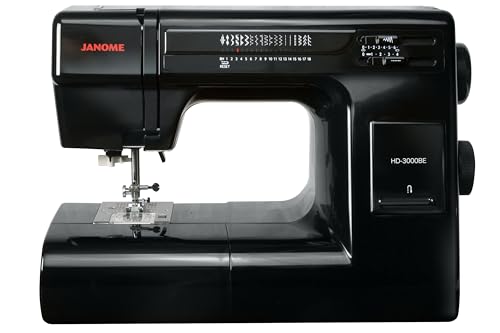
Janome HD3000 Black Edition: Dials and an Aluminum Frame
A mechanical heavy-duty machine with a heavy-duty aluminum frame and an extra high presser foot lift. A plain, sturdy pick for jeans, canvas and bags.
Janome’s specifications for the HD-3000 list a heavy-duty aluminum frame, 18 stitches including a one-step buttonhole, a 5-piece feed dog, drop feed, a free arm, an extra high presser foot lift and a weight of 18.7 pounds. The Black Edition is the black-finish HD3000 sold with a quilting kit on Amazon. Its roller and even feed feet are recommended accessories on Janome’s page, so plan on buying them separately if you sew leather or vinyl. Read the Janome HD3000 profile.
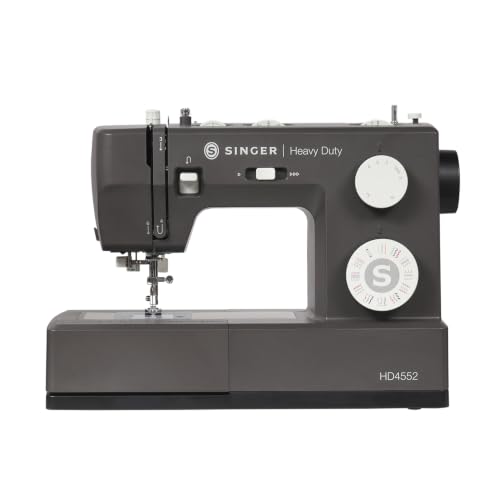
Singer Heavy Duty 4552: The Included Feet Are the Draw
A metal-frame machine that ships with a walking foot and a non-stick foot, the two feet this kind of sewing needs first.
Singer says the 4552 has strong piercing power, a full metal interior frame, 32 stitches, speed control, adjustable presser foot pressure, a stainless steel bedplate and up to 1,000 stitches per minute. Its FAQ names leather, vinyl and multi-layer fabrics, and says the walking foot helps keep feeding even on thick or layered material. It is the easiest of the five to start with because the right feet are already in the box. See the Singer Heavy Duty 4552 profile.
Juki TL-2010Q: A Straight-Stitch Workhorse
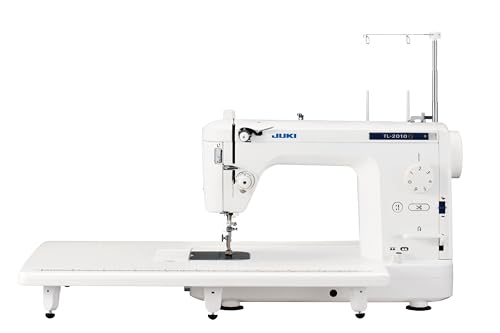
A semi-industrial straight-stitch machine with an even feed foot, a knee lifter and low-speed control for heavy fabrics. No zigzag and no buttonholes.
Juki describes the TL-2010Q as a one-needle lockstitch machine with an aluminum die-cast arm and bed, a thread trimmer, adjustable presser foot pressure and an even feed foot suited to leather. Because it sews only a straight stitch, it does not zigzag, finish edges or make buttonholes. For jeans hems, canvas bags and leather seams it is a fast, controlled choice. See the Juki TL-2010Q profile.
Brother PQ1600S: Straight Stitch With Adjustable Feed
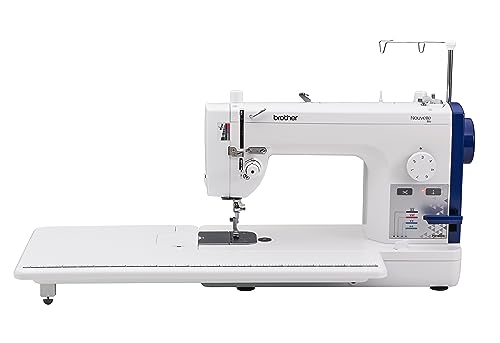
A high-speed straight-stitch machine with four feed dog levels, adjustable presser foot pressure and a pin feed foot. Straight seams only.
Brother markets the PQ1600S to quilters and says it sews up to 1,500 stitches per minute, with four color-coded levels of feed dog and presser foot pressure adjustment and a pin feed foot in the box. Brother’s page does not mention denim or leather, so treat it as a straight-stitch machine whose feed controls give you room to adapt to thicker fabric, not a purpose-built denim machine. It has no zigzag and no buttonholes. See the Brother PQ1600S profile.
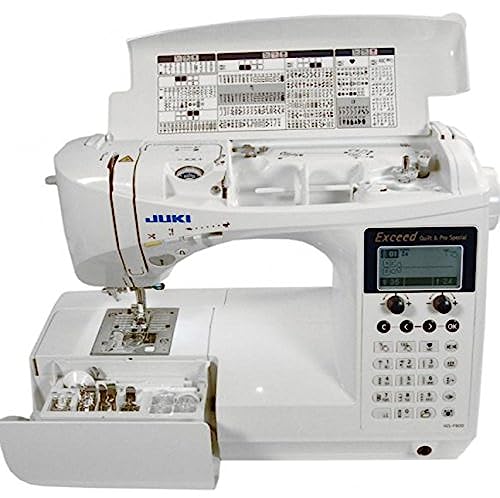
Juki HZL-F600: Computerized, With Denim on Its Product Page
A computerized machine with box feed, a steel feed dog and a walking foot. Juki shows it hemming denim jeans, and it does zigzag and buttonholes too.
Juki lists box feed, a special steel feed dog, 225 stitch patterns, automatic thread trimming, a knee lifter, stepless presser foot pressure and a top speed of 900 stitches per minute. It weighs 21.6 pounds. If you want one machine for jeans, garments, buttonholes and decorative stitching, this is the all-rounder at the top of our range. See the Juki HZL-F600 profile.
Which One for Which Job
- Hemming jeans and occasional bags, simple controls: Janome HD3000 Black Edition or Singer Heavy Duty 4552.
- Leather and vinyl with the feet included: Singer Heavy Duty 4552.
- Fast straight seams in canvas or leather, no zigzag needed: Juki TL-2010Q, or the Brother PQ1600S.
- One machine for denim, garments and finishing: Juki HZL-F600.
- Thick tooling leather or saddlery: an industrial machine, not any of these.
One last tip: whatever you buy, practice the hem on scraps cut from the same garment, with the same thread and needle, before you cut into the jeans.
Sources
Frequently asked questions
Can a home sewing machine sew leather?
Light garment leather, yes, with the right needle and foot. Schmetz makes a Leather needle for leather, artificial leather and heavy non-woven synthetics, and Singer includes a non-stick foot with the Heavy Duty 4552 for leather, suede and vinyl. Thick tooling leather and stacks of many layers are industrial-machine work.
What needle should I use to hem jeans?
Schmetz sells a Denim/Jeans needle in sizes 70/10 through 110/18, made for denim and similar fabrics. Pick the size by how heavy the fabric and thread are, and start the hem with a fresh needle.
Do I need a walking foot for denim and leather?
It is not mandatory for one layer of denim, but it helps a lot on stacked seams, canvas and leather. A walking foot feeds the top layer along with the bottom layer. Singer includes an Even Feed/Walking Foot with the 4552, Juki includes an even feed foot with the TL-2010Q and a walking foot with the HZL-F600.
How do I get over the thick seam at the bottom of a jeans hem?
Slow the machine down, turn the handwheel by hand across the thickest part, and keep the foot level with a folded scrap of denim or a hump jumper behind the seam. Presser foot lift matters too: Juki lists up to about 1/2 inch (12 mm) with the knee lifter on its machines.
Do straight-stitch machines like the Juki TL-2010Q work for denim?
Yes for hems and straight seams, because straight-stitch machines are built around one stitch. They have no zigzag and no buttonholes, so you cannot finish raw edges or sew buttonholes on them.
Which machine is for thick tooling leather and saddlery?
None of the machines here. Heavy tooling leather, harness work and many stacked layers call for an industrial machine with a stronger motor and feed, not a home machine.