We earn a commission if you buy through our links, at no extra cost to you.
Sewing Machine for Quilting: What Matters Most
Choosing a sewing machine for quilting? Quarter-inch piecing, arm space, walking foot, free-motion and knee lifter explained, with five machines that suit the job.
At a glance
Quilters need a reliable 1/4 inch foot, room under the arm, a walking foot and a drop feed for free-motion work. The Juki TL-2010Q and Brother PQ1600S are fast straight-stitch machines, the Juki HZL-F600 adds computerized stitches, and the Brother CS7000X is the entry-level quilting choice with a walking foot.
A quilt is mostly straight lines. That is why many quilters end up with a machine that does fewer things than a general-purpose model but does them with more control: a precise quarter-inch seam, a steady feed through thick layers and room to move a bulky top. This guide explains what to look for in a sewing machine for quilting, then picks five from our best sewing machines of 2026 ranking.
We write from manufacturer pages, not our own sewing trials. Sources are at the end.
Piecing: The 1/4 Inch Seam
Patchwork uses a 1/4 inch seam allowance, and errors multiply across dozens of blocks. A 1/4 inch foot has an edge you run along the fabric so the seam stays consistent. Look for one in the box or in the accessory list:
- Juki supplies a 1/4 inch quilting foot with the TL-2010Q.
- Brother lists a 1/4 inch foot with the PQ1600S and with the CS7000X.
- Janome lists 1/4 inch seam feet among its HD-3000 accessories, and Singer sells a 1/4 inch piecing foot.
Needle position helps too. Singer lists 25 needle positions for straight stitching on the Quantum Stylist 9960 and Juki lists 37 on the HZL-F600, so you can nudge the seam slightly left or right to correct a scant or generous allowance.
Throat Space and Tables
The space between the needle and the arm is how much quilt fits to the right. The larger it is, the less you fight the roll of fabric. According to the manufacturers, Brother’s PQ1600S has 5.7 by 8.7 inches, Juki’s TL-2010Q 8.5 by 6 inches, Singer’s Quantum Stylist 9960 6.4 inches with a height of 4 inches and Singer’s Heavy Duty 4552 more than 6 inches to the right of the needle. Juki gives the HZL-F600 arm size as about 8 inches (203 mm).
An extension table supports the weight so the quilt does not pull on the needle. Brother includes an 11.1 by 23.3 inch table with the PQ1600S, Juki an auxiliary table of 23 by 13 inches with the TL-2010Q, and Singer an extension table with the 9960. Brother’s CS7000X has a wide table too.
Feeding Layers: Walking Foot and Pressure
Piecing two layers is simple. Quilting a sandwich of top, batting and backing is not, because the layers shift. A walking foot (even feed foot) feeds the top layer along with the bottom. It is the first tool to buy for straight-line quilting and binding. Adjustable presser foot pressure helps when you switch between thin cotton and a thick sandwich, and Juki and Brother list it on the TL-2010Q, the HZL-F600 and the PQ1600S.
Free-Motion Quilting
With free-motion quilting you steer the quilt yourself: the feed dogs are lowered or covered, a free-motion (darning) foot hovers over the fabric and you move the quilt in loops and swirls. You need a drop feed, and a needle-down setting so the quilt holds its place when you pause. Slow and steady works best, and a speed limiter helps. Juki says the TL-2010Q’s speed knob, adjustable between 200 and 1,500 stitches per minute, is ideal for free-motion quilting.
Knee Lifter, Thread Cutter and Needle Stop
Three small things add up over a quilt: a knee lifter, which raises the presser foot while both hands hold the fabric; a thread cutter, which saves a trip to the scissors at every seam; and a needle stop up or down, so you can pivot. Juki lists all of them on the TL-2010Q and the HZL-F600, and Brother lists a push-button thread cutter, a programmable needle stop and a knee lifter on the PQ1600S. The CS7000X has none of the three, according to Brother’s specifications.
Straight-Stitch or Computerized?
Straight-stitch machines, the Juki TL-2010Q and Brother PQ1600S, make one stitch. They are fast, simple and strong for piecing and quilting, but they have no zigzag and no buttonholes, so you will need another machine for garments, appliqué satin stitching and finishing. Computerized machines such as the Juki HZL-F600, Singer Quantum Stylist 9960 and Brother CS7000X give up some speed and simplicity for a wider range of stitches. If quilting is most of what you sew, a straight-stitch machine is worth a look. If you also sew clothes, a computerized model saves you from buying twice.
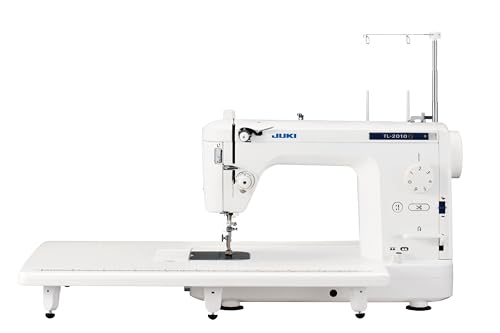
Juki TL-2010Q: Semi-Industrial Straight Stitch
A semi-industrial straight-stitch machine with a 1/4 inch quilting foot, drop feed, knee lifter and thread trimmer. No zigzag, no buttonholes.
Juki lists speeds from 200 to 1,500 stitches per minute, an aluminum die-cast arm and bed, an automatic thread trimmer on a button and the heel of the foot controller, a needle-down stop and a presser foot lift of up to about 1/2 inch (12 mm) with the knee lifter. An even feed foot, a 1/4 inch quilting foot and an auxiliary table are standard. See the Juki TL-2010Q profile.
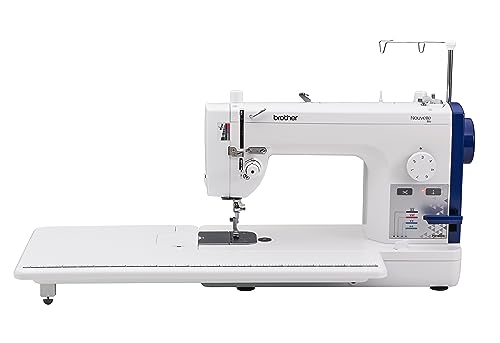
Brother PQ1600S: A Big Workspace for Quilters
A high-speed straight-stitch machine with a large needle-to-arm space, wide table, thread cutter and knee lifter. Seven feet include free motion and 1/4 inch.
Brother says the PQ1600S sews up to 1,500 stitches per minute and has a 5.7 by 8.7 inch needle-to-arm space, an 11.1 by 23.3 inch table, a push-button thread cutter, a programmable needle stop position, four feed dog levels and a built-in telescopic cone thread stand. A knee lifter, a free motion quilting foot, a pin feed foot and a 1/4 inch foot are in the box. It sews straight stitches only. See the Brother PQ1600S profile.
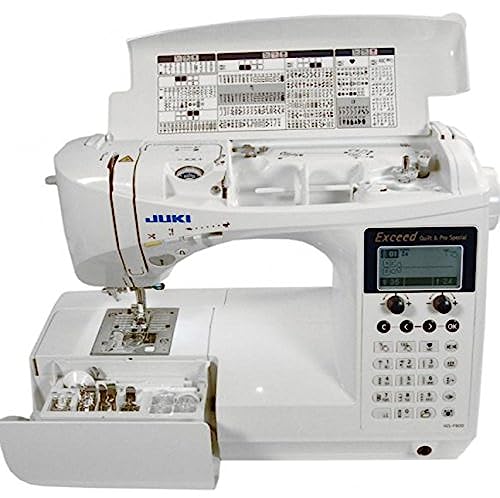
Juki HZL-F600: Quilting and Garments in One
A computerized machine with a walking foot, quilt and patchwork feet, knee lifter and thread trimming. Quilts and sews clothes too.
Juki’s page for the HZL-F series lists a wide underarm space, a knee-lifting lever with presser foot lift of up to about 1/2 inch (12 mm), drop feed, a walking foot, a quilt foot, an open toe foot and a patchwork foot as standard accessories, and a foot controller with thread trimming. It also lists 225 stitch patterns, a top speed of 900 stitches per minute and stitch widths that vary automatically for some quilting stitches. See the Juki HZL-F600 profile.
Singer Quantum Stylist 9960: Computerized With an Extension Table
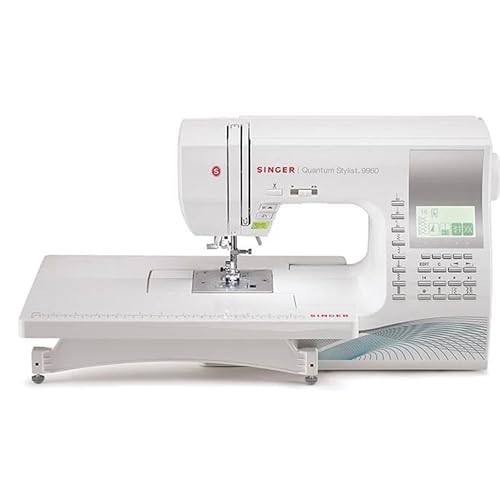
A computerized machine with an included extension table, needle up/down, drop feed, a thread trimmer and many decorative stitches.
Singer lists 600 built-in stitches, five fonts, 13 one-step buttonhole styles, a thread trimmer button, drop feed, speed control, needle up/down for pivoting and free-motion quilting, an included extension table and 6.4 inches of sewing space. It suits quilters who also sew garments and want decorative stitches for the quilt top and binding. See the Singer Quantum Stylist 9960 profile.
Brother CS7000X: An Entry Point With a Walking Foot
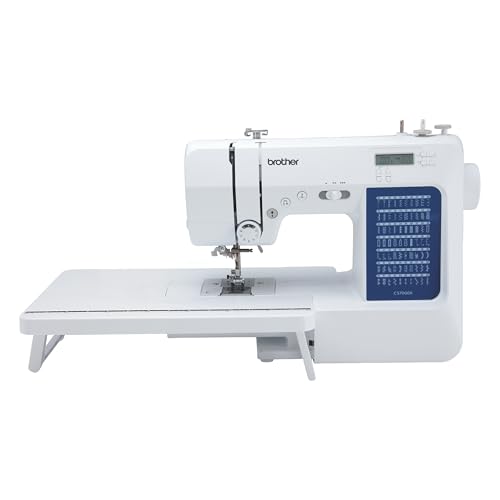
A computerized machine with 70 stitches, a wide table, a walking foot, quilting foot and quilt guide in the box. A starter quilting machine.
Brother’s list for the CS7000X includes 70 built-in stitches, an LCD, automatic drop feed, a walking foot, a quilting foot, a 1/4 inch foot, a quilt guide and a wide table, with a top speed of 750. It has no knee lifter or thread cutter, so it works as a first quilting machine rather than a high-volume one. See the Brother CS7000X profile.
Quick Picks
- Piecing fast, straight stitch only: Juki TL-2010Q or Brother PQ1600S.
- Quilting and sewing clothes on one machine: Juki HZL-F600 or Singer Quantum Stylist 9960.
- Starting out in quilting: Brother CS7000X.
Whichever you pick, start each quilt with a fresh needle. Schmetz makes a Quilting needle (sizes 75/11 and 90/14) with a taper and a slightly rounded point meant to avoid damaging layered material.
Sources
- Juki TL-2010Q official product page
- Brother PQ1600S official product page (Internet Archive copy, July 16, 2026)
- Juki HZL-F600 official product page
- Singer Quantum Stylist 9960 official product page
- Brother CS7000X official product page (Internet Archive copy, October 28, 2026)
- Singer Heavy Duty 4552 official product page
- Janome HD-3000 official product page (Internet Archive copy, September 24, 2026)
- Schmetz needle guide
Frequently asked questions
Do I need a special machine to quilt?
No. Any machine with a reliable straight stitch can piece a quilt. Quilters usually want more of the following: a 1/4 inch foot, a walking foot, a drop feed or feed dog cover for free-motion work, room under the arm and an extension table.
What is a 1/4 inch foot and why does it matter?
It is a presser foot that guides the fabric edge so seams come out 1/4 inch wide, the standard in patchwork. Juki supplies a 1/4 inch quilting foot with the TL-2010Q, Brother lists a 1/4 inch foot with the PQ1600S and the CS7000X, and Singer sells a 1/4 inch piecing foot as an accessory.
What does a walking foot do for quilting?
It feeds the top layer along with the bottom one, so the quilt sandwich does not creep or pucker. Brother includes a walking foot with the CS7000X, Juki with the HZL-F600, and the Singer Heavy Duty 4552 includes an Even Feed/Walking Foot.
How much space under the arm do I need?
More is easier when you push a bulky quilt through. Brother lists a 5.7 by 8.7 inch needle-to-arm space on the PQ1600S, Juki lists 8.5 by 6 inches on the TL-2010Q, and Singer lists 6.4 inches of sewing space on the Quantum Stylist 9960. Larger quilts may call for a longarm, which is another type of machine.
Can I free-motion quilt on a home machine?
Yes. Lower or cover the feed dogs, attach a free-motion or darning foot and move the fabric yourself. Drop feed is listed on the Juki TL-2010Q, the Brother CS7000X and the Singer 9960. The Brother PQ1600S includes a free motion quilting foot.
Straight-stitch machine or computerized machine for quilting?
A straight-stitch machine such as the Juki TL-2010Q or Brother PQ1600S is built for speed and clean seams, but it has no zigzag and no buttonholes. A computerized machine such as the Juki HZL-F600 or the Brother CS7000X adds decorative stitches, zigzag and buttonholes for garments and binding.